



Get Free Samples
Recent News
- ▶ Flat wall-mounted wind-sand separator
- ▶ Air Cooled Condensing Unit | ACCU HVAC Refrigeration Unit
- ▶ Xinran NG Compressor System Passes FAW Jiefang Validation
- ▶ China's High-Power Diesel Generators Export Surge 131.81%
- ▶ High-Efficiency Industrial Centrifugal Fans Low-Noise Air Blower for Boiler Induced Draft Fans
- ▶ Explosion-Proof Ffrp Roof Exhaust Fan - FRP Material, High Efficiency for Industrial Use
Message
Difference Between Air Handling Unit (AHU) and Fresh Air Handling Unit (FAHU)
Time : Mar 02, 2026
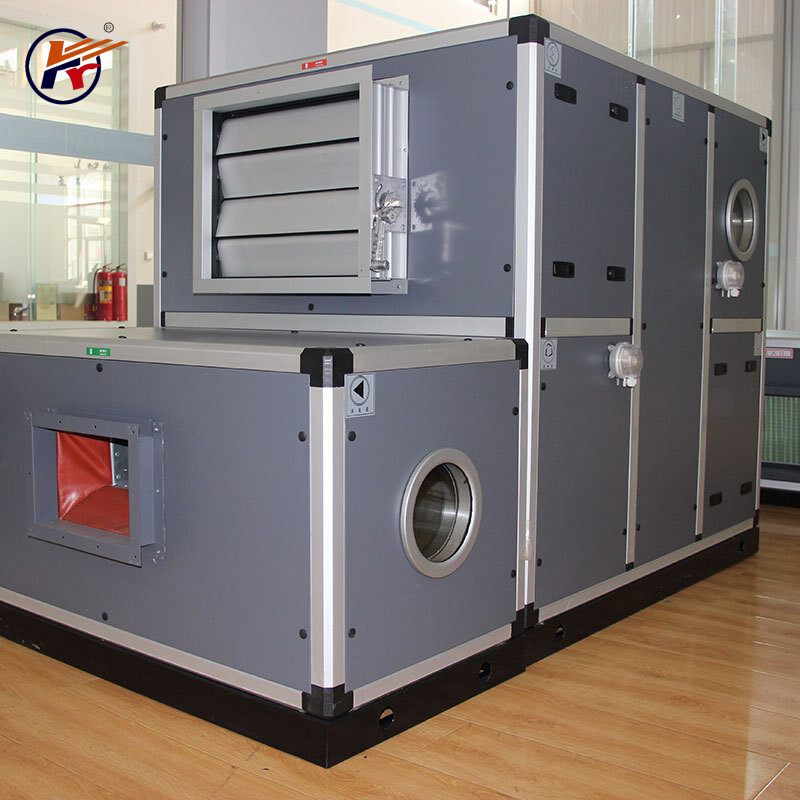
In the HVAC industry, many people confuse Air Handling Units (AHU) and Fresh Air Handling Units (FAHU). Although they may look similar in design, their functions and purposes are completely different.
Below is a detailed comparison highlighting their fundamental differences:
1. Basic Function
FAHU: Processes 100% fresh outdoor air. It cools, heats, filters, and humidifies outside air, then supplies it to the building without recirculating indoor air.
AHU: Mainly works by circulating a mixture of return air from indoor spaces and a proportion of fresh outdoor air, then redistributes the treated air back into the building.
2. Air Recirculation
FAHU: No air recirculation — it uses a one-way path that delivers air from outside to inside.
AHU: Recirculates 80%–90% of indoor air, mixed with a small amount of outdoor air to meet breathing quality standards per ASHRAE requirements.
3. Applications
FAHU: Used in spaces that require extremely high ventilation rates to prevent contamination or ensure a healthy environment, such as hospitals, laboratories, operating rooms, and commercial buildings with strict sustainability standards.
AHU: The most popular choice for office buildings, shopping malls, hotels, and residential buildings, where air recirculation is technically and economically acceptable.
4. Energy Efficiency
FAHU: Consumes more energy because treating 100% outdoor air (which can be excessively hot, cold, or humid) requires heavy workloads for cooling and heating coils.
AHU: More energy-efficient because it recirculates pre-conditioned air, reducing the operating load on the HVAC system.
5. Design & Static Pressure
Both units use filters, fans, and cooling/heating coils. However:
- FAHU: Designed to withstand higher static pressure to overcome resistance from untreated outdoor air.
- AHU: Equipped with dampers to control the return air ratio.
Conclusion
Choose FAHU when 100% clean air quality and healthy ventilation are the top priorities.
Choose AHU when the goal is energy efficiency and thermal control with air recirculation.
Next page:Air Cooled Condensing Units
Leave A Message
If you are interested in our products and want to know more details, please leave a message here, we will reply you as soon as we can.