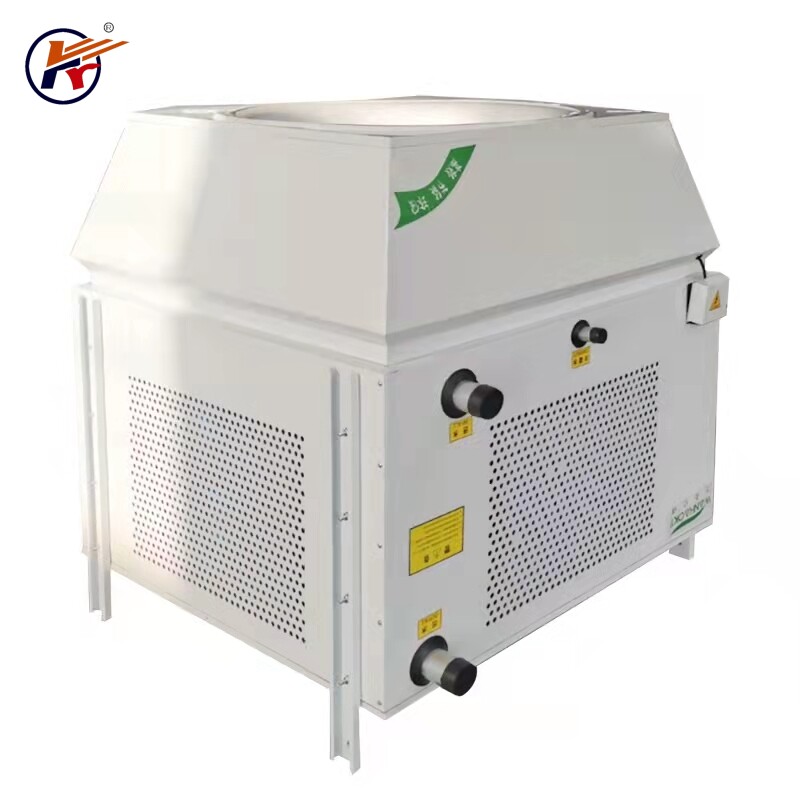
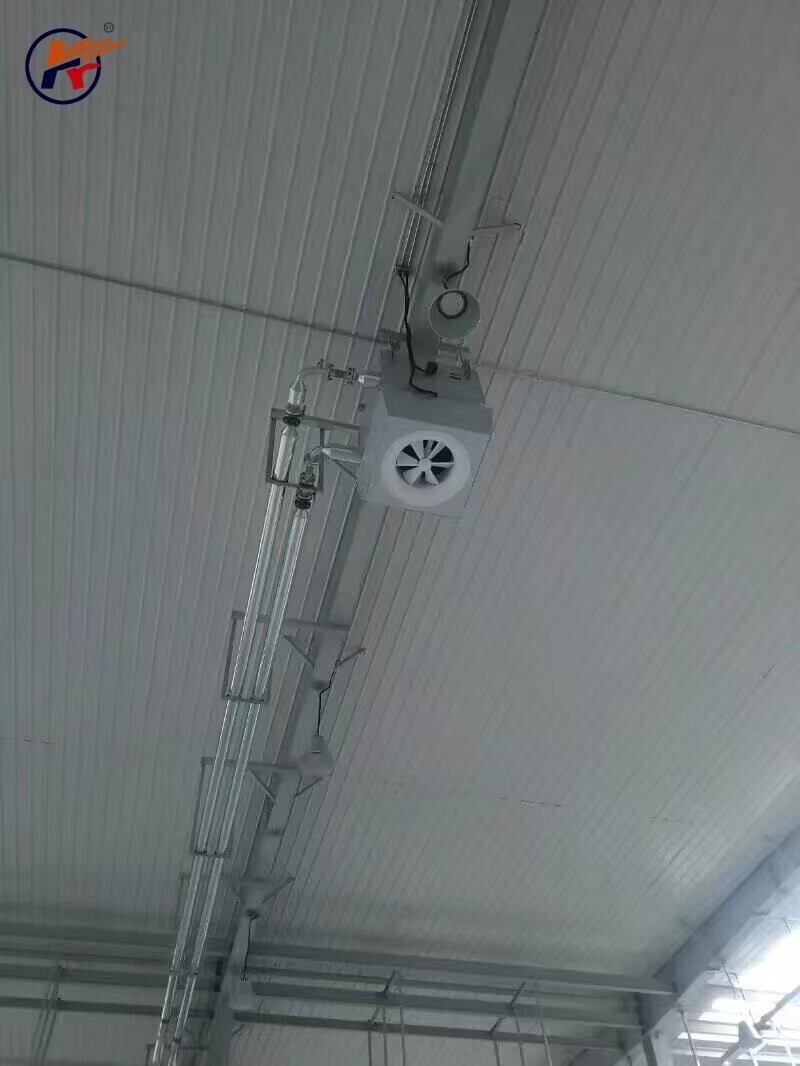
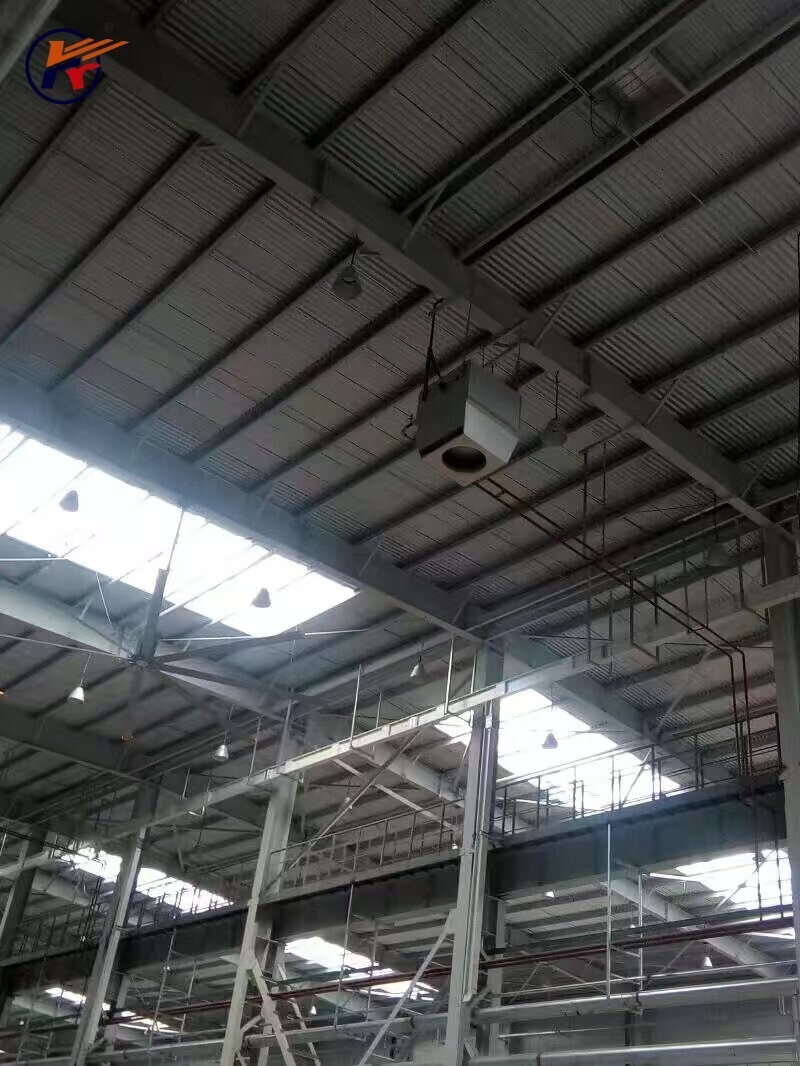
In high-rise buildings such as industrial workshops, logistics warehouses, stadiums, and exhibition centers—where the floor height exceeds 5 meters and the space volume is more than 1,000 cubic meters—traditional heating equipment often faces the pain points of "difficult heat delivery, high energy consumption, and uneven temperature". As a professional heating equipment specially developed for such scenarios, high-space heating units effectively solve the heating problems of large spaces through innovative air distribution design and high-efficiency heat exchange technology, and have become one of the core heating equipment in industrial and commercial fields in winter.
A high-space heating unit is a heating equipment that integrates the functions of "high-efficiency heat exchange, precise temperature control, and powerful air supply". Its core advantage lies in the ability to directionally deliver heat to a long distance of 10-30 meters, while preventing heat accumulation in the upper space, thus achieving the heating effect of "fast temperature rise at low positions and uniform overall temperature".
Its typical applicable scenarios include:
- Industrial field: Machinery processing workshops, automobile production workshops, heavy equipment assembly workshops (with a floor height of 8-15 meters);
- Logistics and warehousing: E-commerce logistics warehouses, cold chain transit warehouses (needing to take into account both heating and moisture-proofing);
- Public buildings: Stadiums (such as basketball courts, badminton courts), exhibition centers, atriums of large shopping malls (with a floor height of 6-20 meters);
- Special scenarios: Aircraft maintenance hangars, railway station waiting halls, large-scale breeding farms (requiring corrosion resistance and low noise).
According to the differences in heat source types and heat exchange methods, high-space heating units are mainly divided into the following three categories, each with significantly different technical characteristics:
- Core technology: Adopting full-premixed combustion technology (with a thermal efficiency of 92%-96), combined with a high-speed centrifugal fan. After mixing the heat generated by combustion with air, it is delivered to the ground in the form of "jet flow" through a directional air duct; some models are equipped with "temperature sensing probes", which can automatically adjust the combustion power according to the space temperature.
- Advantages: Fast temperature rise speed (can reach the set temperature 15-30 minutes after startup), no restriction by the power grid (suitable for industrial scenarios with high power outage risks), and large heating area per unit (up to 1,000-3,000 square meters).
- Precautions: Gas pipelines need to be laid, and smoke exhaust channels should be reserved during installation; it is suitable for spaces with good ventilation conditions.
- Core technology: Using PTC ceramic heating elements (fast temperature rise, no open flame, high safety) or "stainless steel heating tubes", combined with an intelligent temperature control system, which can realize "zoned temperature control" and "scheduled start-stop"; some high-end models are equipped with "air purification filters" to take into account both heating and air purification.
- Advantages: Convenient installation (no need to lay pipelines), low noise (operating noise ≤ 50dB), high temperature control accuracy (temperature fluctuation ±1℃), suitable for scenarios with high requirements for environmental protection and low noise (such as exhibition centers and laboratories).
- Precautions: High power consumption; it is necessary to ensure that the load of the power supply line meets the requirements (it is recommended to lay 6-10 square millimeters of copper wires separately).