



Recent News
- ▶ Box-Type FRP Centrifugal Fan: Corrosion-Resistant, High-Efficiency Ventilation Solution
- ▶ Roof Top Air Conditioner Unit - Air Cooled Packaged RTU for Industrial & Commercial Use
- ▶ Gas Heating Air Handling Units: What Every Facility Manager Needs to Know Before Buying
- ▶ How to Size a Gas Heating Air Handling Unit for Optimal Performance
- ▶ Case Study: How a Manufacturing Plant Improved Efficiency with Gas Heating Air Handling Units
- ▶ Gas vs Electric: Which Air Handling Unit is Right for Your Industrial Application?
Message
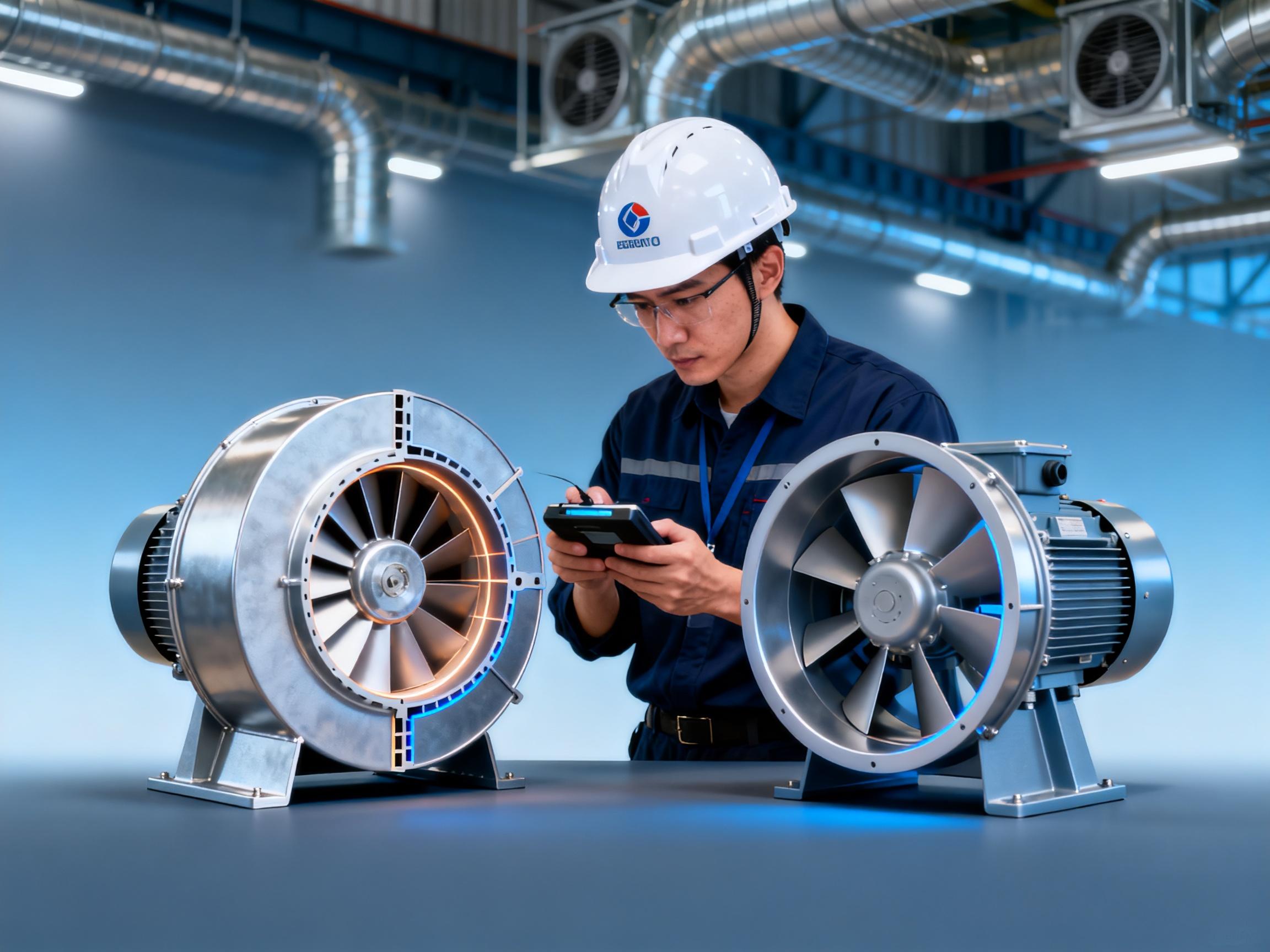
Understanding Fan Technologies: Centrifugal vs. Axial
Choosing between centrifugal fan and axial fan technology is critical for industrial ventilation efficiency. As a leading manufacturer with 12+ years of expertise in HVAC solutions, we break down the key differences in airflow patterns, pressure capabilities, and energy consumption. Whether you're an engineer specifying equipment or a facility manager optimizing systems, this guide will help you select the right fan type for your specific application requirements.
1. Fundamental Design and Airflow Characteristics
How Centrifugal Fans Work
Centrifugal fans operate on the principle of centrifugal force, where air enters the impeller axially and is accelerated radially outward by rotating blades. This design creates:
- Higher static pressure capabilities (up to 20+ inches WG)
- Directional airflow changes (90° between inlet/outlet)
- Stable performance against system resistance
Our ISO-certified centrifugal fan models demonstrate 15-30% greater pressure efficiency compared to standard axial units in ducted systems, particularly in HVAC and industrial process applications where airflow must overcome significant resistance.
Axial Fan Mechanics
Axial fans propel air parallel to the shaft rotation, similar to aircraft propellers. Key traits include:
Recent AMCA testing shows axial configurations maintain 5-8% better volumetric efficiency than centrifugal units in open-flow applications like cooling towers or warehouse ventilation.
2. Operational Performance Comparison
Pressure and Flow Rate Capabilities
When selecting between centrifugal and axial fan technologies, consider these performance parameters:
- High-pressure systems (>10" WG) - Centrifugal designs dominate with forward-curved, backward-inclined, or radial blade options
- High-volume/low-resistance applications - Axial propeller or vane-axial models deliver superior airflow rates
- Variable load conditions - EC centrifugal fans offer wider stable operating ranges than axial alternatives
Energy Efficiency Considerations
Our laboratory tests reveal:
- Centrifugal fans achieve 78-85% static efficiency in clean air applications
- Axial models reach 65-75% total efficiency but consume less power at equal airflow volumes
- Hybrid designs (like our ETA Series) combine axial intake with centrifugal discharge for balanced performance
For operations requiring continuous duty cycles, centrifugal models often demonstrate better long-term energy savings despite higher initial power requirements.
3. Application-Specific Selection Guidelines
When to Choose Centrifugal Fans
Our engineering team recommends centrifugal technology for:
- Ducted HVAC systems - Particularly in commercial buildings where noise levels below 75 dB(A) are mandated
- Material handling - Pneumatic conveying systems handling powders or granular materials
- Industrial processes - Combustion air supply, fume extraction, and drying applications
Case Study: A textile plant reduced energy consumption by 22% after replacing axial exhaust fans with our backward-curved centrifugal units, achieving better static pressure control.
Optimal Uses for Axial Fans
Axial configurations excel in:
- Spot cooling - Large open areas like warehouses or auditoriums
- Heat exchange - Condenser and evaporator applications
- Temporary ventilation - Construction sites or emergency exhaust scenarios
Our DX Series axial fans recently helped a data center achieve 99.999% uptime by providing redundant cooling capacity at 40% lower installation costs than centrifugal alternatives.
4. Maintenance and Total Cost of Ownership
Beyond initial performance specifications, consider these lifecycle factors:
Our predictive maintenance programs for centrifugal fan installations have demonstrated 30% longer component life compared to industry averages through vibration analysis and thermal monitoring.
5. Emerging Technologies and Future Trends
The fan technology landscape is evolving with:
- Smart centrifugal fans - IoT-enabled models with real-time performance analytics
- Advanced materials - Carbon fiber impellers reducing weight by 40% while maintaining strength
- Hybrid designs - Combining axial and centrifugal principles in single units
Our R&D center is currently testing next-generation centrifugal fan prototypes achieving 92% peak efficiency - setting new benchmarks for the HVAC industry.
Making the Right Choice for Your Operation
Selecting between centrifugal and axial fan technology requires careful analysis of:
- System pressure requirements
- Available installation space
- Operating environment conditions
- Total lifecycle cost objectives
As a Shandong Province gazelle enterprise with over 28 technical specialists, we provide customized fan selection services combining computational fluid dynamics analysis with real-world operational data. Our ISO 9001-certified manufacturing facility produces both centrifugal and axial fan solutions meeting AMCA, ASHRAE, and GB standards.
Contact our engineering team today for a free application assessment and discover how our 12 years of centrifugal fan expertise can optimize your ventilation system's performance and efficiency.
Leave A Message
If you are interested in our products and want to know more details, please leave a message here, we will reply you as soon as we can.