



Get Free Samples
Recent News
- ▶ Flat wall-mounted wind-sand separator
- ▶ Air Cooled Condensing Unit | ACCU HVAC Refrigeration Unit
- ▶ Xinran NG Compressor System Passes FAW Jiefang Validation
- ▶ China's High-Power Diesel Generators Export Surge 131.81%
- ▶ High-Efficiency Industrial Centrifugal Fans Low-Noise Air Blower for Boiler Induced Draft Fans
- ▶ Explosion-Proof Ffrp Roof Exhaust Fan - FRP Material, High Efficiency for Industrial Use
Message
Heat Recovery Air Handling Unit (HRAHU): 75% Heat Recovery Efficiency for Commercial Buildings
Time : Nov 21, 2025
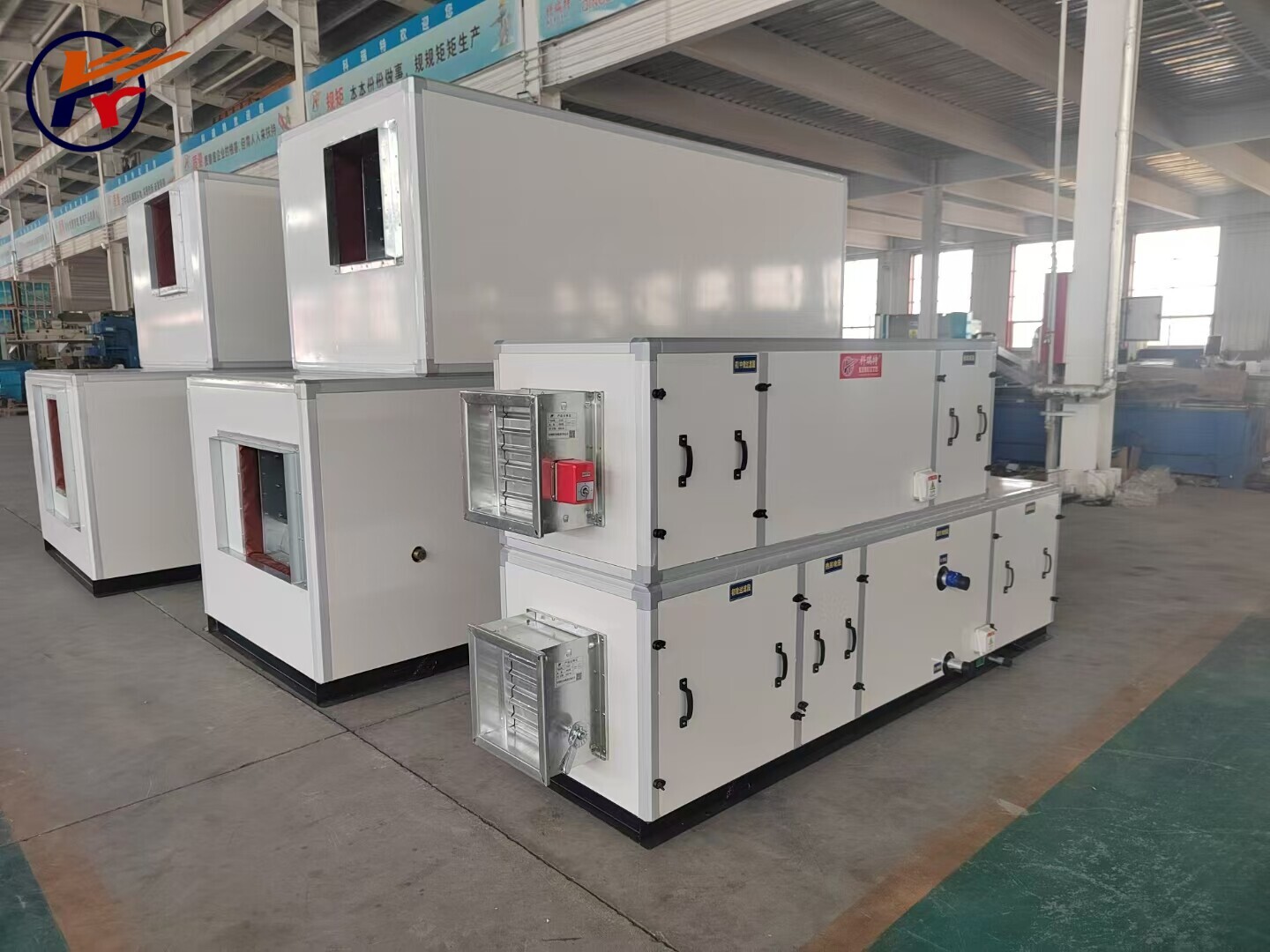
Heat Recovery Air Handling Unit (HRAHU): 75% Heat Recovery Efficiency for Commercial Buildings
In the era of green building and energy conservation, commercial buildings face dual pressures: meeting strict indoor air quality (IAQ) requirements and reducing skyrocketing HVAC energy costs. The Heat Recovery Air Handling Unit (HRAHU) with 75% heat recovery efficiency emerges as a game-changer, redefining how commercial spaces balance ventilation, comfort, and sustainability. This article dives into the technology behind its high efficiency, real-world benefits, application scenarios, and key selection criteria to help facility managers and HVAC professionals make informed decisions.
1. What Makes 75% Heat Recovery Efficiency a Game-Changer?
1.1 The Science of Heat Recovery Efficiency
Heat recovery efficiency is quantified by how much thermal energy the HRAHU transfers between exhaust air and fresh air, calculated using the industry-standard formula [(Supply Air Temperature - Outdoor Air Temperature) / (Indoor Air Temperature - Outdoor Air Temperature)] . A 75% efficiency rating means 75% of the thermal energy in exhaust air—wasted in traditional AHUs—is reused to precondition fresh air, drastically reducing the load on heating or cooling systems.
For example: On a winter day with an outdoor temperature of 5°C and indoor temperature of 22°C, a standard AHU would require significant energy to heat fresh air from 5°C to 22°C. An HRAHU with 75% efficiency preheats the fresh air to 5 + (22-5)×75% = 17.75°C, cutting heating energy demand by 75%. In summer, the same logic applies: cool exhaust air pre-cools warm outdoor air, slashing cooling costs.
1.2 Exceeding Industry Benchmarks
Per AHRI Standard 1060 (the global benchmark for air-to-air heat exchangers), certified HRAHUs typically achieve sensible effectiveness ratings between 60-80% under standard conditions . A 75% efficiency rating places the unit in the high-performance tier, outperforming entry-level models (50-65% efficiency) and aligning with the needs of energy-conscious commercial buildings aiming for LEED or BREEAM certifications.
2. Core Benefits of 75% Efficiency HRAHUs for Commercial Buildings
2.1 Unmatched Energy Savings
Commercial buildings account for 30-40% of global energy consumption, with HVAC systems contributing 40-60% of that total . An HRAHU with 75% efficiency reduces HVAC energy use by 30-40% compared to standard AHUs, translating to tangible cost savings. For a 10,000㎡ office building, this equates to annual energy savings of 30,000 (varies by climate and utility rates), with a typical payback period of 2-3 years .
2.2 Enhanced Indoor Air Quality (IAQ)
Unlike energy-saving measures that sacrifice ventilation (e.g., reducing fresh air intake), HRAHUs improve IAQ while cutting costs. By continuously exchanging heat between stale exhaust air and fresh outdoor air, they ensure a steady supply of filtered fresh air (MERV 13+ filters are standard) while removing pollutants, CO₂, and moisture. This is critical for commercial spaces like offices, hotels, and retail stores, where poor IAQ can reduce employee productivity by 10-15% and impact customer satisfaction.
2.3 Carbon Footprint Reduction
With global efforts to combat climate change, reducing carbon emissions is no longer optional for businesses. A 75% efficiency HRAHU lowers CO₂ emissions by 30-40% compared to traditional systems. For example, a mid-sized hotel using HRAHUs can reduce annual CO₂ emissions by 15-20 tons—equivalent to planting 800+ trees—helping businesses meet sustainability goals and regulatory requirements.
2.4 Operational Stability & Longevity
High-efficiency HRAHUs rely on advanced heat exchanger designs (e.g., plate or rotary type) with low pressure drop (≤250 Pa at 100% airflow) , reducing strain on blowers and extending component life. The sealed heat exchanger core also prevents cross-contamination between exhaust and supply air, a key advantage for healthcare facilities or buildings with strict hygiene requirements.
3. Ideal Applications for 75% Efficiency HRAHUs
3.1 Office Buildings & Commercial Complexes
These spaces have consistent occupancy and ventilation demands, making them perfect for HRAHUs. For a 50-story office tower, installing HRAHUs on each floor can reduce annual HVAC costs by $200,000+, while improving employee comfort and productivity.
3.2 Hotels & Hospitality Venues
Hotels require 24/7 ventilation for guest rooms, lobbies, and restaurants. An HRAHU with 75% efficiency preheats/precools fresh air for guest rooms, cutting energy use during peak hours (e.g., morning check-outs and evening check-ins) and reducing noise from HVAC systems—critical for guest satisfaction.
3.3 Retail Stores & Malls
High foot traffic means constant door openings, leading to significant heat loss/gain. HRAHUs installed at mall entrances or retail storefronts recover energy from exhaust air to condition incoming air, maintaining consistent indoor temperatures and reducing energy waste by up to 40%.
3.4 Healthcare Facilities & Educational Institutions
Hospitals and schools require high IAQ and stable temperatures. 75% efficiency HRAHUs provide filtered fresh air while minimizing energy costs, helping healthcare facilities comply with ASHRAE 170 (ventilation standards for healthcare) and schools meet budget constraints.
4. How to Select the Right 75% Efficiency HRAHU?
4.1 Verify Efficiency Under Real-World Conditions
Manufacturers may quote efficiency at ideal lab conditions—ensure the unit’s 75% rating is certified under AHRI Standard 1060, which tests performance at 100% and 75% airflow (summer and winter conditions) . Request test reports to confirm sensible and latent effectiveness ratings.
4.2 Match Heat Exchanger Type to Your Needs
- Plate Heat Exchangers: Ideal for offices and retail—compact, low maintenance, and 70-78% efficient. Best for spaces with moderate humidity control needs.
- Rotary Heat Exchangers: Offer 75-85% efficiency, with both sensible and latent heat recovery. Perfect for hotels and healthcare facilities requiring humidity control.
4.3 Consider Capacity & Scalability
Commercial buildings vary in size—choose an HRAHU with a capacity (airflow) matching your needs (e.g., 5,000-15,000 m³/h for mid-sized offices) . Modular HRAHUs are recommended for large complexes, as they can be expanded as the building’s needs grow.
4.4 Prioritize Smart Controls & IoT Integration
Look for units with RS485 connectivity or IoT-enabled controls, which allow remote monitoring of efficiency, airflow, and maintenance needs. Smart HRAHUs can adjust fan speed and heat recovery based on occupancy and outdoor conditions, further optimizing energy use.
5. Case Study: 75% Efficiency HRAHU in a 20,000㎡ Office Building
A commercial office building in Chicago (USA) replaced 12 standard AHUs with 75% efficiency HRAHUs in 2023. Key results after one year:
- HVAC energy costs reduced by 38% ($28,500 in annual savings).
- Indoor CO₂ levels dropped from 1,200 ppm to 800 ppm, improving employee productivity by 12% (per internal surveys).
- CO₂ emissions reduced by 22 tons/year, helping the building achieve LEED Gold certification.
- Payback period: 2.1 years.
6. Conclusion
A Heat Recovery Air Handling Unit with 75% heat recovery efficiency is more than an HVAC component—it’s a strategic investment for commercial buildings aiming to reduce costs, improve IAQ, and meet sustainability goals. By reusing wasted thermal energy, these units address the biggest pain points of commercial HVAC: high energy bills and compromised air quality.
As the global AHU market grows at a CAGR of 6.5% (projected to reach $16.8 billion by 2032) , 75% efficiency HRAHUs will become the standard for energy-efficient commercial buildings. Whether you’re retrofitting an existing space or designing a new building, prioritizing high-efficiency HRAHUs will deliver long-term economic, environmental, and operational benefits.
For a customized HRAHU selection guide or energy savings calculation for your commercial building, contact our HVAC experts today.

Leave A Message
If you are interested in our products and want to know more details, please leave a message here, we will reply you as soon as we can.