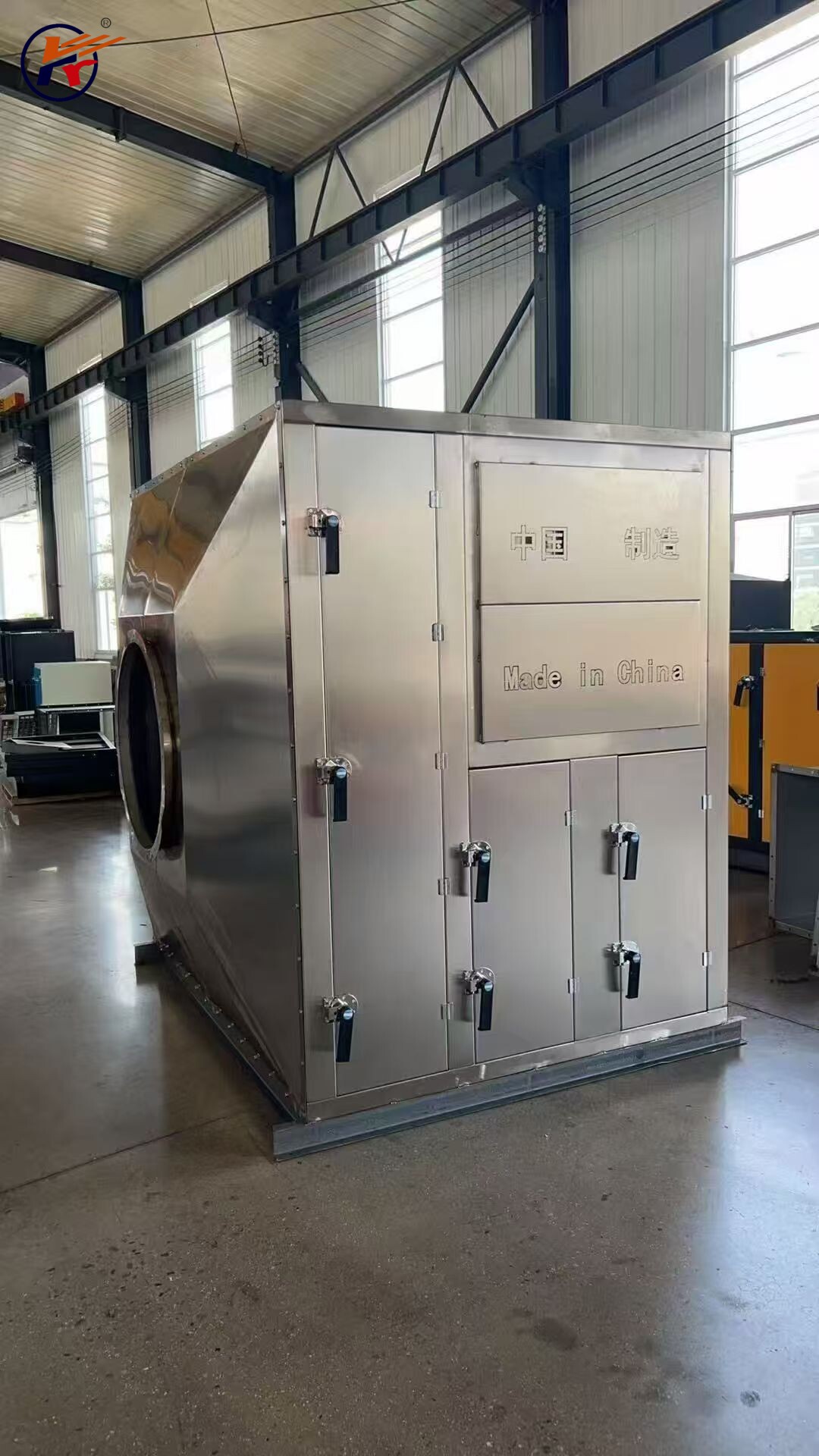
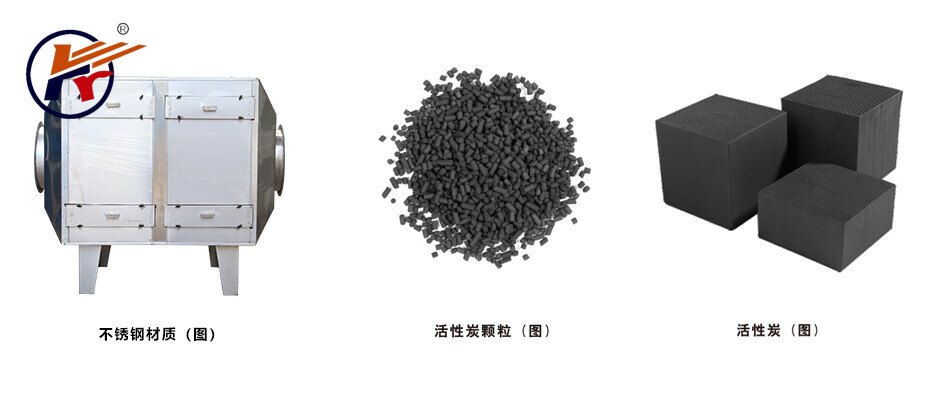
In today’s industrial production, volatile organic compounds (VOCs) and odor pollution have become major challenges—they not only violate environmental regulations (such as EPA’s Clean Air Act and EU’s REACH Regulation) but also harm employee health and nearby communities. Traditional carbon filter boxes often suffer from corrosion, low adsorption efficiency, and frequent replacement, failing to meet long-term operation needs. The stainless steel activated carbon filter box, with its "corrosion resistance + high adsorption capacity + compliance optimization" advantages, has emerged as a preferred choice for industrial and commercial waste gas treatment, perfectly matching Google users’ search intentions for "VOCs removal equipment," "industrial odor filter," and "corrosion-resistant carbon box."
Crafted from high-quality 304 or 316L stainless steel, the filter box boasts exceptional corrosion resistance—ideal for treating acidic, alkaline, or high-humidity waste gas (such as waste gas from electroplating plants, chemical reactors, and food processing workshops). Unlike ordinary carbon steel boxes that rust and deform within 1-2 years, the stainless steel structure can maintain stable performance for 5-8 years, even in environments with 80% humidity and frequent chemical exposure. The seamless welding technology further prevents gas leakage, ensuring safe operation and reducing maintenance costs by 40% compared to traditional models.
Equipped with premium granular activated carbon (GAC) or extruded activated carbon, the filter box achieves a VOCs removal rate of 90%-98% and an odor removal rate of over 95%. The activated carbon’s large specific surface area (≥1000 m²/g) enables it to effectively adsorb benzene, toluene, xylene, formaldehyde, and other harmful substances, as well as odorous compounds (such as hydrogen sulfide and ammonia). For high-concentration waste gas scenarios (VOCs concentration ≤500 mg/m³), the multi-layer adsorption structure extends the gas residence time to 3-5 seconds, ensuring thorough purification. A chemical plant in Ohio reported that after installing the stainless steel activated carbon filter box, its VOCs emissions dropped from 85 mg/m³ to 12 mg/m³, fully complying with EPA’s emission limits (≤25 mg/m³).

The stainless steel activated carbon filter box is highly adaptable to diverse industrial and commercial needs, with a processing air volume ranging from 500 to 10,000 m³/h:
- Chemical Industry: Treats waste gas from paint mixing, solvent recovery, and chemical synthesis processes.
- Manufacturing: Removes VOCs and odors from printing plants, electronics factories, and plastic molding workshops.
- Food & Pharmaceutical: Purifies waste gas from food fermentation, pharmaceutical production, and packaging processes (food-grade stainless steel meets FDA standards).
- Commercial Venues: Eliminates odors in hotels, shopping malls, and wastewater treatment plants, improving air quality.
For special scenarios, customized options are available: waterproof activated carbon for high-humidity waste gas, fire-retardant activated carbon for flammable gas treatment, and modular design for easy expansion in large factories.
The filter box features a detachable carbon layer design, allowing for quick activated carbon replacement without disassembling the entire equipment—saving maintenance time by 50%. The activated carbon has a long service life (3-6 months under normal conditions), and some models are equipped with a pressure difference sensor that alerts users when replacement is needed, avoiding blind maintenance. In terms of cost, although the initial investment is 20%-30% higher than ordinary carbon boxes, the long service life, low maintenance costs, and energy-saving operation (no additional power consumption except for matching fans) result in a lower total cost of ownership (TCO) over 5 years—saving enterprises an average of $8,000-$15,000 annually.
To meet global environmental regulations, the stainless steel activated carbon filter box complies with multiple international standards:
- EPA (U.S. Environmental Protection Agency): Meets VOCs emission limits in 40 CFR Part 63.
- EU REACH & CE: Certified for safe use in European industrial facilities.
- ISO 9001 & ISO 14001: Ensures product quality and environmental management system compliance.
For enterprises aiming to expand globally, the certified filter box eliminates regulatory barriers, reducing the risk of fines (up to $37,500 per day for EPA violations) and operational disruptions.
When selecting a filter box, consider the following key factors to ensure optimal performance:
- Waste Gas Characteristics: Choose 316L stainless steel for acidic/alkaline waste gas; waterproof activated carbon for high-humidity environments.
- Air Volume & Concentration: Select the appropriate model based on actual waste gas flow rate and VOCs concentration (e.g., 1000-2000 m³/h for small workshops, 5000+ m³/h for large factories).
- Certification Requirements: Prioritize products with EPA, CE, or local environmental certifications to ensure compliance.
- Maintenance Convenience: Opt for models with detachable carbon layers and pressure difference monitoring for easier operation.
As environmental regulations become increasingly strict worldwide, the stainless steel activated carbon filter box has become an indispensable equipment for enterprises to achieve "environmental compliance + cost reduction + health protection." Its corrosion resistance, high adsorption efficiency, and versatile applications make it the core matching content for Google search keywords such as "industrial VOCs filter," "stainless steel carbon box," and "odor removal equipment." Whether it’s a small workshop or a large industrial park, this filter box provides a reliable, efficient, and compliant waste gas treatment solution, helping enterprises achieve sustainable development while fulfilling their environmental responsibilities.