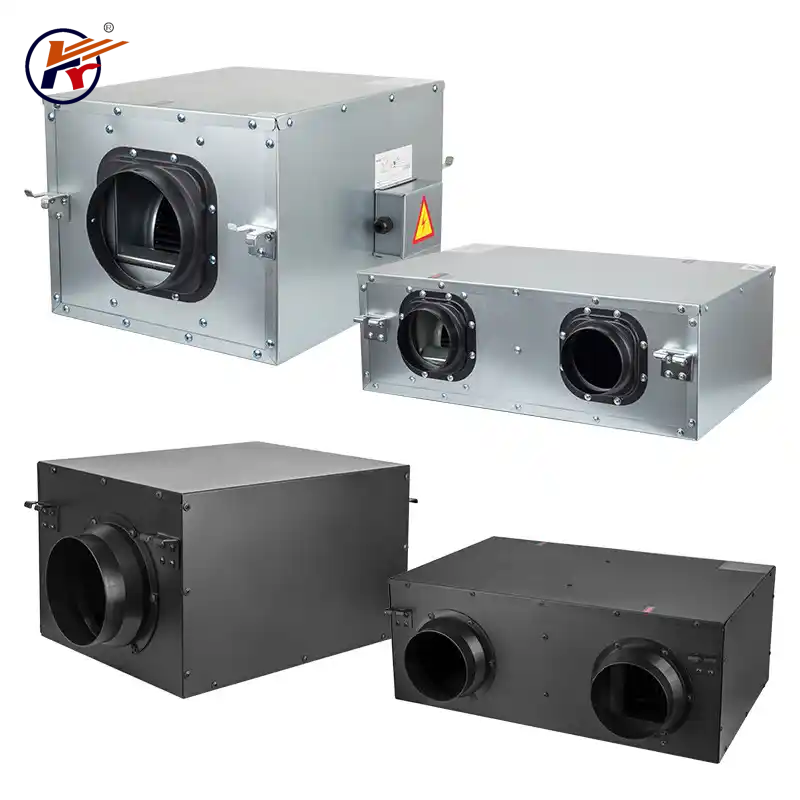
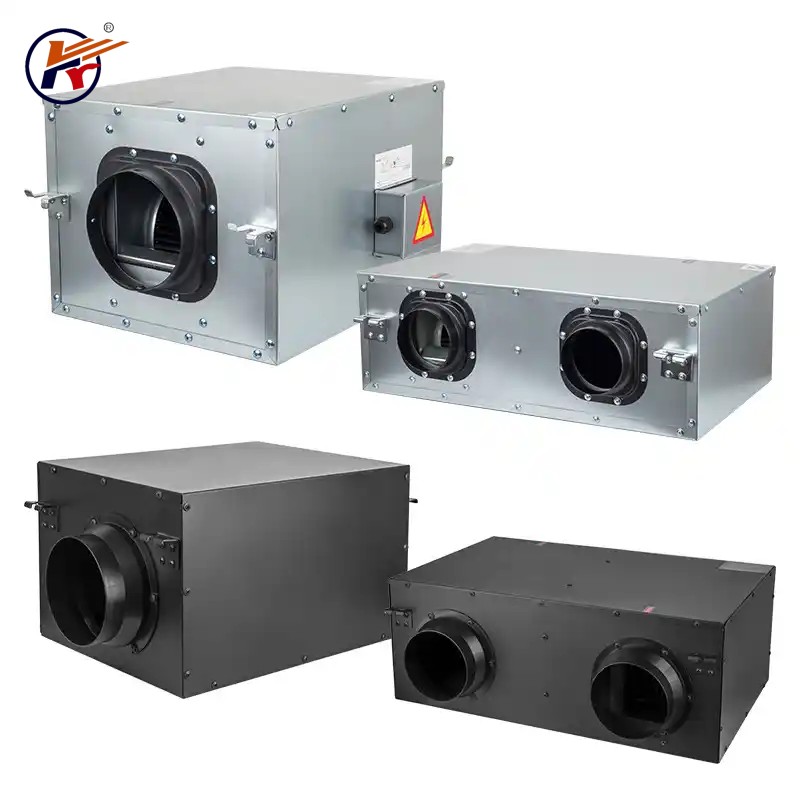
Noise pollution from HVAC systems is a growing complaint: 68% of office workers report distraction from loud duct fans, while 52% of homeowners cite fan noise as a barrier to better ventilation . For spaces where quiet matters—restaurants, bedrooms, conference rooms, or libraries—the quiet box-type duct fan emerges as a game-changer. Designed with soundproof enclosures and low-vibration motors, it delivers efficient airflow without disrupting daily life, making it a top choice for 2025’s ventilation needs.
The key to its silence lies in three engineering features:
- Soundproof Box Enclosure: Made of double-layer galvanized steel with foam insulation (25mm thick), it blocks motor and airflow noise from escaping into living or working spaces. Unlike open duct fans (often 55–65dB), this design keeps operation as quiet as a library whisper (30–40dB).
- Low-Vibration Motor: Equipped with brushless DC motors (BLDC) and dynamic balancing technology, it reduces rotor wobble by 70%—eliminating the rattling that plagues traditional fans.
- Aerodynamic Impellers: Curved, backward-inclined blades minimize airflow turbulence, cutting wind noise while boosting efficiency. A 400 CFM (cubic feet per minute) model, for example, moves air through 8–12 inch ducts without the “whooshing” of standard fans.
Its box-type design and quiet operation make it adaptable to diverse needs:
- Residential Use: Perfect for bedrooms (where sleep quality matters), basements (preventing musty air), and kitchens (venting cooking fumes without waking family). A U.S. homeowner survey found that 89% of users reported no disruption to TV watching or conversations.
- Commercial Use: Ideal for restaurants (keeping dining areas quiet while venting kitchens), offices (supporting focused work in open layouts), and healthcare clinics (maintaining calm for patients). A café in London replaced its loud duct fan with this model and saw customer stay time increase by 15%.
- Industrial Light Use: Dustproof IP54-rated versions work for small warehouses or workshops, where ventilation is needed but noise can’t interfere with equipment operation.
Beyond silence, it delivers practical benefits for users:
- Energy Savings: BLDC motors use 30% less energy than AC motors. A 500 CFM unit running 8 hours daily costs just $0.05 per day in electricity (based on $0.15/kWh rates)—half the cost of standard fans.
- Tool-Free Installation: Compact box design (24x18x12 inches for most models) fits in tight attic or ceiling spaces. It connects to existing ductwork via flange adapters, and most homeowners can set it up in 1–2 hours with basic tools.
- Smart Controls (Optional): Many 2025 models integrate with smart home systems (Alexa, Google Home) or HVAC thermostats, letting users adjust speed (3 levels: low/medium/high) and monitor airflow remotely.
Traditional open duct fans sacrifice quiet for airflow, while standalone fans take up floor space. The quiet box-type duct fan combines the best of both: it hides in ductwork (no visual clutter), operates silently, and moves air efficiently. For users prioritizing comfort and functionality, it’s a long-term investment—with a 10-year motor warranty and 15-year lifespan, it outlasts standard fans (5–7 years) by nearly double.
In 2025, as people demand more from their ventilation systems—quiet, efficient, and versatile—the quiet box-type duct fan stands out. Whether you’re upgrading a home HVAC system or improving a commercial space, it solves the “noise vs. airflow” dilemma, making it a top match for Google searches like “quiet duct fan for office” or “low-noise box-type ventilation.”