



Recent News
- ▶ Flat wall-mounted wind-sand separator
- ▶ Air Cooled Condensing Unit | ACCU HVAC Refrigeration Unit
- ▶ Xinran NG Compressor System Passes FAW Jiefang Validation
- ▶ China's High-Power Diesel Generators Export Surge 131.81%
- ▶ High-Efficiency Industrial Centrifugal Fans Low-Noise Air Blower for Boiler Induced Draft Fans
- ▶ Explosion-Proof Ffrp Roof Exhaust Fan - FRP Material, High Efficiency for Industrial Use
Message
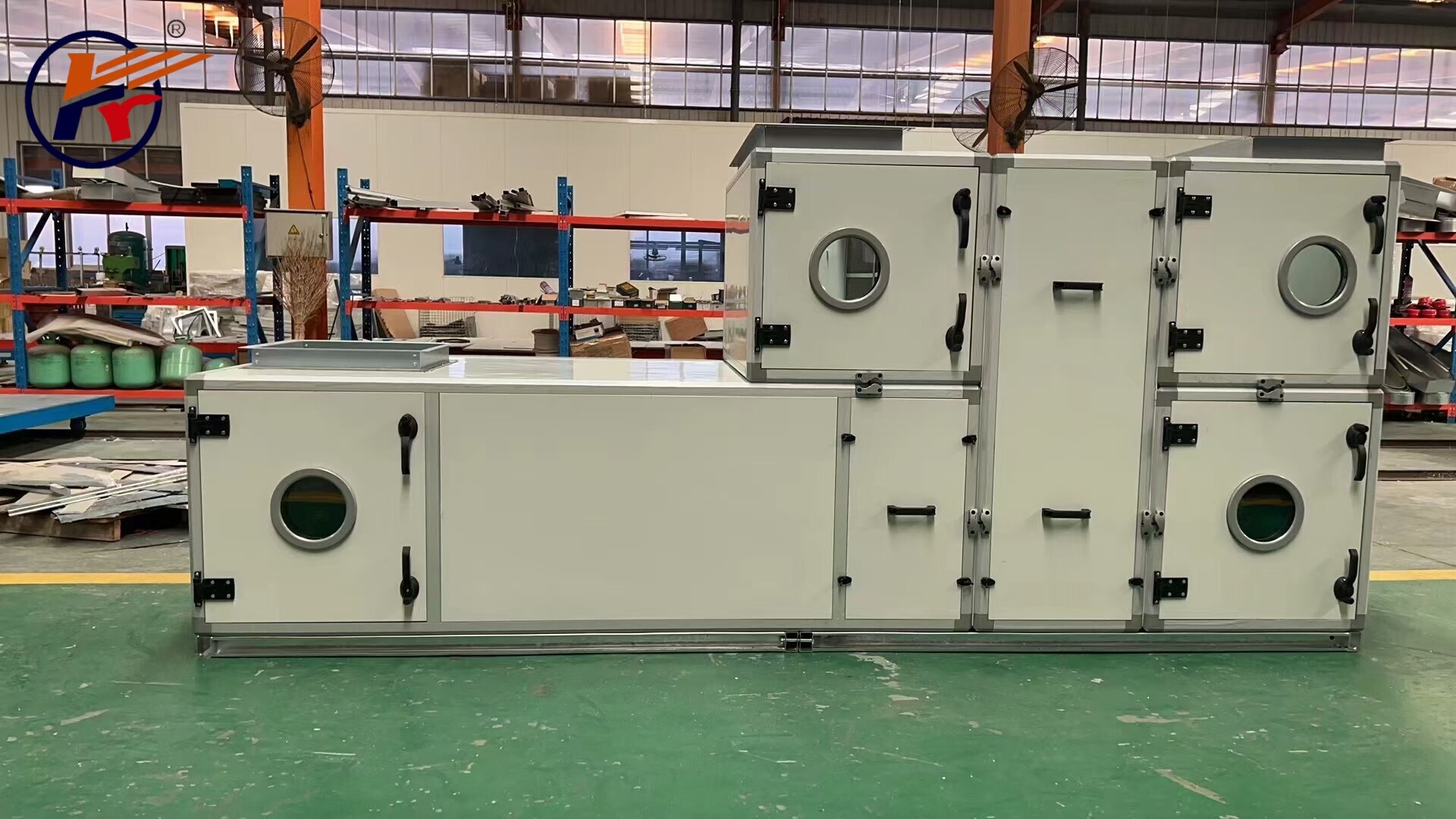
What is an Air Handling Unit (AHU)?
An Air Handling Unit, commonly known as an AHU, is the core component of Heating, Ventilation, and Air Conditioning (HVAC) systems in commercial, industrial, and large residential buildings. Its primary function is to circulate, condition, and distribute air throughout a space to ensure optimal indoor air quality (IAQ), thermal comfort, and controlled ventilation.
Think of it as the “lungs” of a building: it takes in fresh outdoor air (or recirculated indoor air), filters, heats, cools, humidifies, or dehumidifies it, and then delivers the treated air through a network of ducts.
Key Components of a Standard Air Handling Unit
A typical AHU is a large metal cabinet containing several essential sections:
Housing/Casing: The insulated outer shell that contains all components and minimizes thermal loss and noise.
Fan Section: Contains powerful centrifugal or axial fans (supply and sometimes return fans) to move air through the unit and into the ductwork.
Filtration Section: Houses air filters (e.g., pre-filters, bag filters, HEPA filters) that remove dust, pollen, microbes, and other contaminants from the incoming air.
Heat Exchanger Coils:
Cooling Coil: Uses chilled water or refrigerant to remove heat and dehumidify the air.
Heating Coil: Uses hot water, steam, or electric resistance to heat the air.
Humidifier/Dehumidifier: Adds or removes moisture from the air to maintain precise humidity levels as required.
Dampers: Control the volume and mix of outdoor air and recirculated air.
Controls and Sensors: Modern AHUs are managed by a Building Management System (BMS) that monitors temperature, humidity, pressure, and air quality, adjusting components for efficiency and performance.
Main Functions and Benefits
Temperature Control: Precisely heats or cools supply air.
Ventilation: Introduces and manages fresh outdoor air to dilute CO2 and pollutants.
Air Filtration: Significantly improves indoor air quality by removing particulates and allergens.
Humidity Control: Maintains comfortable and healthy moisture levels, preventing mold growth and static electricity.
Energy Efficiency: Modern AHUs with features like variable speed drives (VSDs) and energy recovery wheels (ERVs/HRVs) can dramatically reduce a building’s energy consumption.
Common Types of Air Handling Units
Draw-Through AHU: The fan is located after the coils, “drawing” air through them. This is the most common configuration, providing more even air distribution over the coils.
Blow-Through AHU: The fan is positioned before the coils, “blowing” air through them.
Horizontal vs. Vertical: Refers to the airflow direction within the unit, chosen based on available mechanical room space.
Modular/ Custom AHU: Built from standardized sections to meet specific project requirements.
Packaged AHU: A self-contained, often smaller unit where all components are housed together, commonly used in rooftop applications (RTUs).
FAQs About Air Handling Units
Q: What is the difference between an AHU and an FCU?
A: An Air Handling Unit (AHU) conditions and supplies air for a large zone or entire building, often connecting to ductwork. A Fan Coil Unit (FCU) is a smaller, terminal device typically serving a single room or zone, using chilled or hot water from a central system to condition recirculated room air.
Q: How often should AHU filters be replaced?
A: It depends on filter type, usage, and environmental conditions. Pre-filters may need changing every 1-3 months, while final filters can last 6-12 months. Regular inspection and monitoring pressure differential gauges are crucial.
Q: What is the purpose of an energy recovery wheel in an AHU?
A: An energy recovery wheel (ERV/HRV) transfers heat and sometimes moisture between the outgoing exhaust air and incoming fresh air. This pre-conditions the incoming air, drastically reducing the energy load on the heating or cooling coils.
Q: Where are AHUs typically installed?
A: They are installed in dedicated mechanical rooms, on rooftops (as Roof-Top Units or RTUs), or in ceiling voids, depending on the building design and size.
Leave A Message
If you are interested in our products and want to know more details, please leave a message here, we will reply you as soon as we can.